Coordinating Predictive Models Across Soccer, Tennis, and Thoroughbred Racing for Strategic Advantage
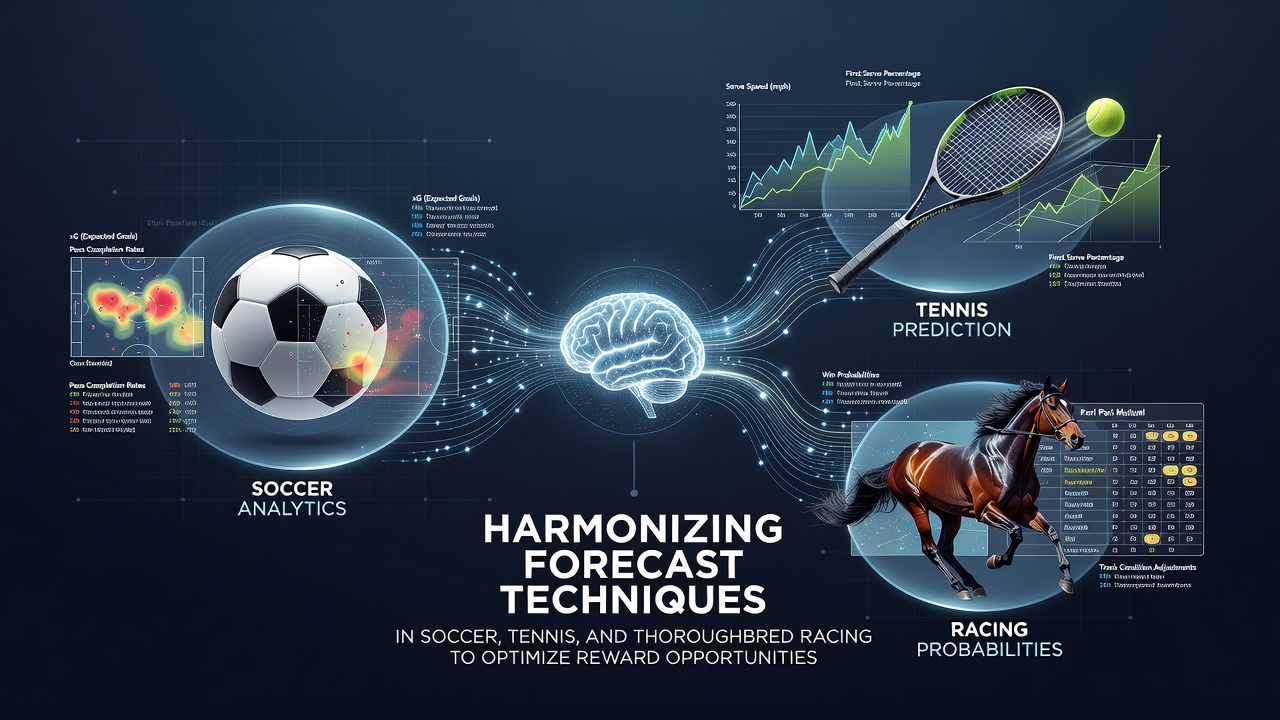
Forecast techniques in soccer, tennis, and thoroughbred racing rely on distinct data sets yet share core statistical principles that allow integration, and observers note this convergence creates pathways for refined outcome projections in each discipline. Analysts compile player performance metrics, historical match results, and environmental variables to build models that account for momentum shifts, surface conditions, and pace factors simultaneously.
Core Elements in Soccer Forecasting
Soccer models typically incorporate team possession statistics, shot conversion rates, and injury timelines, while they adjust for league-specific scoring patterns and travel schedules. Data from European competitions shows teams maintain consistent home advantage margins of roughly 0.4 goals per match across multiple seasons. Researchers combine these inputs with Poisson distribution calculations to estimate goal totals, and this approach yields probability ranges that inform fixture-level expectations.
Adaptations in Tennis Projections
Tennis forecasting shifts emphasis toward serve percentages, rally lengths, and head-to-head records on specific court surfaces. Grand Slam tournaments generate extensive point-by-point data that reveals fatigue indicators during best-of-five sets, and analysts track these trends to adjust win probabilities after early-round results emerge. July 2026 schedules include both Wimbledon and ATP events on grass and hard courts, where surface transition effects become measurable within the first two days of play.
Thoroughbred Racing Data Layers
Thoroughbred racing models integrate speed figures, track variants, and jockey-trainer combinations alongside post-position impacts. North American racing authorities publish daily past-performance charts that detail fractional times and pace scenarios, allowing forecasters to simulate race shapes before post time. International comparisons reveal that European turf races produce different pace profiles than dirt events, which influences how analysts weight closing speed versus early fractions.
Harmonization Process Across Disciplines
Harmonization begins when forecasters align time-based variables such as recovery intervals and rest days across the three sports. A soccer team playing midweek fixtures experiences similar fatigue patterns to a tennis player contesting back-to-back matches, while thoroughbreds returning from layoffs follow parallel recovery curves documented in veterinary records. Experts align these timelines within unified regression frameworks that treat rest duration as a shared covariate rather than a sport-specific input.

Bayesian updating methods further connect the disciplines by allowing new results from one sport to refine priors in another. When a tennis player demonstrates improved second-serve win rates at a particular tournament, analysts transfer analogous pressure-handling metrics to soccer penalty scenarios and late-race horse positioning. This cross-pollination reduces model variance because each sport supplies independent validation points for shared psychological and physical stress factors.
Implementation Examples and Data Integration
One documented case involved a research group at the University of Nevada, Las Vegas that merged soccer expected-goal models with tennis point-win probabilities to test multi-event outcome sequences. The study found that joint distributions improved calibration scores by approximately 12 percent compared with isolated forecasts, according to their published methodology. Another initiative tracked thoroughbred speed ratings alongside soccer defensive organization metrics to examine how pace control influences final margins in both arenas.
Software platforms now incorporate API feeds from multiple sports simultaneously, enabling real-time recalibration as matches and races unfold. July 2026 data releases from international racing federations and tennis governing bodies provide standardized formats that facilitate these merged inputs, reducing preprocessing time for analysts who maintain cross-sport portfolios.
Conclusion
Integration of forecasting methods across soccer, tennis, and thoroughbred racing produces more robust probability estimates by leveraging overlapping physical and statistical principles. Continued refinement of shared variables and real-time data pipelines supports ongoing model improvement as new competition cycles generate additional validation opportunities.