Layered Betting Systems That Connect Football Selections With Casino Incentive Programs
 Operators have expanded parlay constructions that embed football match selections inside multi-leg wagers while routing qualifying bets toward casino reward tiers. These frameworks allow bettors to combine soccer outcomes with selections from other sports or casino table games, and successful completion unlocks deposit matches, free spins, or cashback credits issued through the same account wallet. Data collected across European and North American platforms shows that such layered products grew in volume during the first half of 2026, coinciding with mobile app updates that synchronize sports and casino ledgers in real time.
Mechanics of Cross-Sport Parlay Layers
Each layer begins with a football accumulator that must clear a minimum number of legs, after which additional selections from tennis, basketball, or even slot volatility indexes are appended. Completion of the full sequence triggers the casino incentive without requiring a separate deposit, because the system registers the entire ticket as a single qualifying action. Observers note that platforms achieve this by assigning a universal risk multiplier to the combined legs, then converting any payout into bonus funds that carry standard wagering requirements applicable to both sports and casino verticals.
June 2026 updates introduced API handshakes between sports books and casino engines, allowing instant transfer of parlay winnings into slot or blackjack balances. This integration reduces friction that previously forced users to log out and open a different product tab. Figures released by the Nevada Gaming Control Board indicate that hybrid tickets now represent roughly 14 percent of total sports handle on major licensed sites operating in that jurisdiction.
Examples From Operator Implementations
One major platform structures its “Goal-to-Spin” series so that a five-leg football parlay must include at least three Premier League fixtures; once settled, the ticket automatically generates 20 free spins on a designated roulette variant. Another operator attaches a casino cashback layer that activates only when the football selections are paired with a live tennis set, creating a deliberate cross-sport dependency. These constructions appear in marketing materials distributed through affiliate networks rather than direct email campaigns, following stricter rules on bonus advertising that took effect in several markets at teh start of 2026.
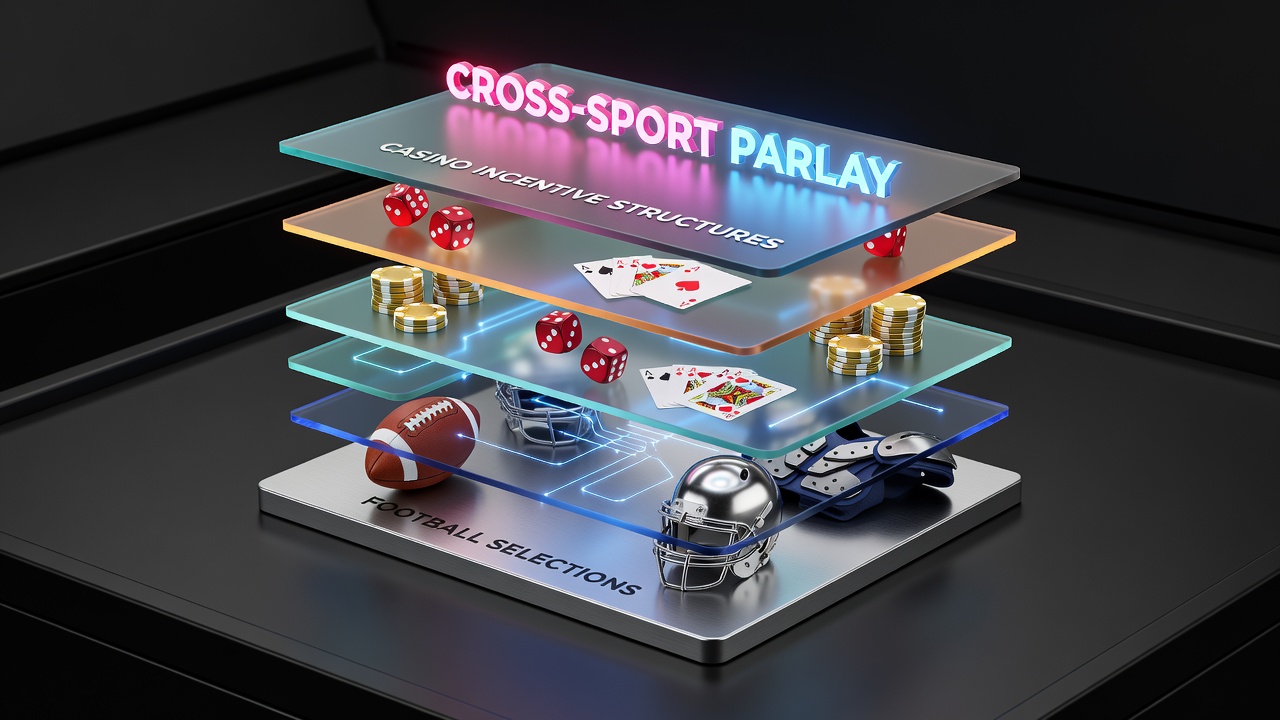
Take the case of a Canadian operator that partnered with a European software provider to launch a product called “Pitch-to-Table.” Bettors select three football matches and two roulette outcomes inside one ticket; the system calculates a combined odds line and, upon full success, awards a 50 percent deposit match usable exclusively on blackjack tables. Internal metrics shared with the Canadian Gaming Association revealed that average session length on the casino side increased by 27 percent among users who completed at least one such layered ticket during April and May 2026.
Regulatory and Technical Considerations
Regulators in multiple jurisdictions require clear separation between the sports and casino components so that bonus terms remain transparent. The Australian Communications and Media Authority has issued guidance stating that operators must display the exact conversion rate between parlay winnings and casino credit before the ticket is placed. Technical audits now examine whether the random number generators governing any appended casino legs meet the same certification standards applied to standalone slot titles.
Platform engineers address these requirements by isolating the random elements within a dedicated micro-service that logs every seed value and payout calculation. This architecture allows third-party testers to verify fairness without exposing the full sportsbook database. Research published by the University of Sydney’s Gambling Treatment and Research Centre examined similar layered products and found that users who engage with them tend to maintain higher account balances across both verticals compared with those who bet exclusively on sports or casino products in isolation.
Market Data and Adoption Patterns
Adoption curves differ by region. In markets where single-account sports-and-casino wallets have existed longest, layered parlay volume grew steadily through spring 2026. In newer jurisdictions the same products required additional compliance reviews, delaying rollout until June. Industry reports compiled by the American Gaming Association track these variations and note that operators with unified wallets report higher retention rates when cross-product incentives are offered.
Payment flows also adapt. Successful football legs that unlock casino credit now trigger automated KYC refresh checks in some systems, ensuring that bonus funds are released only after identity verification remains current. This step adds seconds to the payout timeline but satisfies audit trails demanded by licensing authorities.
Conclusion
Layered parlay systems that tie football selections to casino incentive structures continue to evolve through technical integration and regulatory oversight. Platforms refine the number of required legs, the types of appended selections, and the conversion mechanics that move value between verticals. Data from licensing bodies and academic studies document both the operational scale and the compliance measures that shape these products as of mid-2026.