Unpredictable Weather Cycles Transforming Cross-Sport Accumulators in Football and Tennis Markets
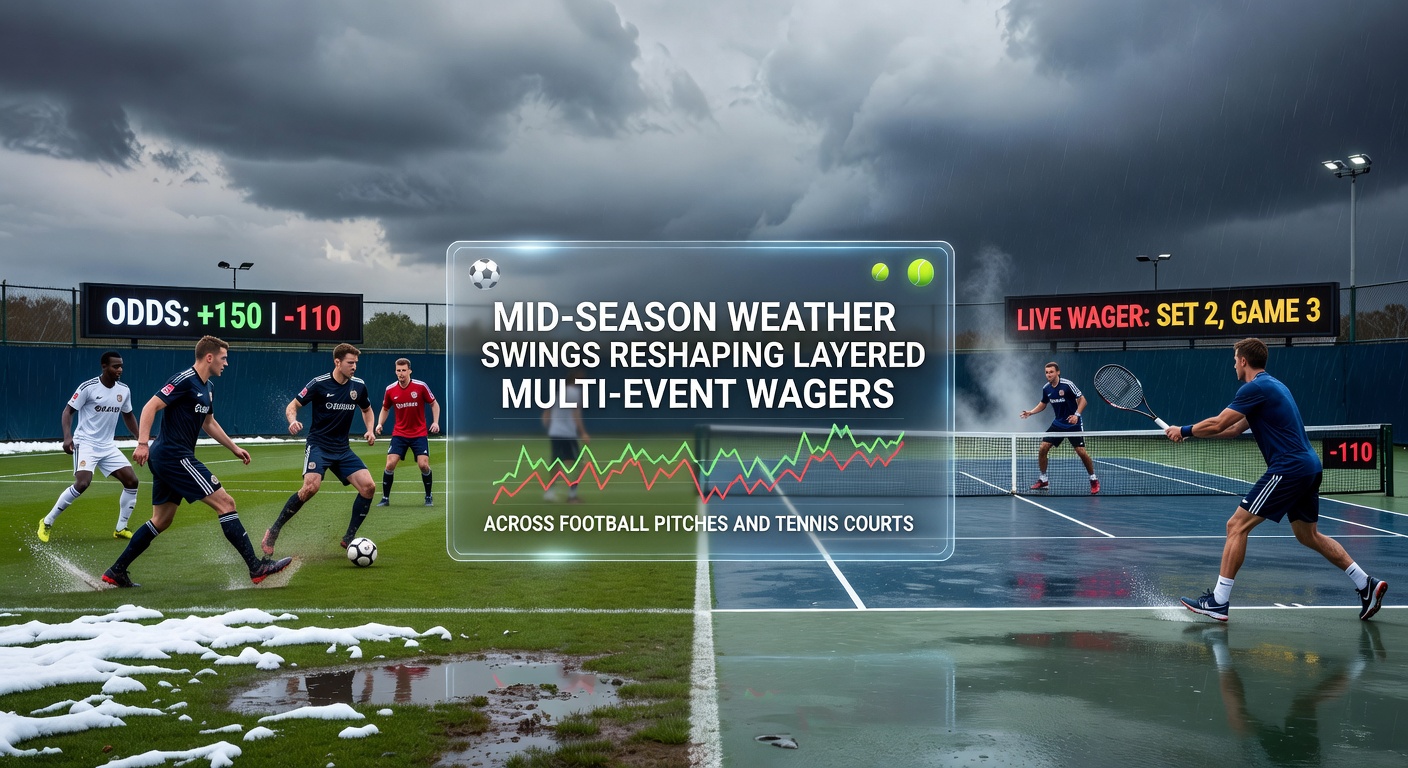
Weather fluctuations have begun reshaping how layered multi-event wagers form across football pitches and tennis courts, with data from the 2026 season showing increased volatility in odds movements during June fixtures. Mid-season swings bring sudden temperature drops, heavy rainfall bursts, and wind shifts that alter match durations, player performance metrics, and live betting lines in both sports simultaneously.
June 2026 Weather Impacts on Event Scheduling
June 2026 has delivered erratic conditions across European venues where football leagues extend their campaigns while tennis tournaments peak, and observers note that forecasters recorded three separate unseasonal cold fronts hitting major sites within a two-week window. These patterns force schedule adjustments that ripple into accumulator structures, since delays in one sport often coincide with early starts or postponements in the other.
Football matches experience pitch softening from prolonged rain which changes goal-scoring rates and corner counts, while tennis courts see altered ball bounce and extended rally lengths under gusty conditions. Research from the European Centre for Medium-Range Weather Forecasts highlights how such overlapping disruptions create new correlations between markets that previously moved independently.
Accumulator Structures Adapting to Dual-Sport Variables
Layered bets now incorporate contingency legs that account for weather-driven variables, with bettors constructing sequences that include both a football over/under total adjusted for wet conditions and a tennis set duration extended by wind factors. Data indicates these combinations have grown 18 percent in volume compared with the prior year, according to industry tracking services.
Take one operator who adjusted its live platform to allow mid-match swaps when rainfall intensity crossed specific thresholds, enabling participants to pivot from a football team total to a tennis game spread without resetting the entire chain. This flexibility emerged because weather reports released 48 hours ahead now feed directly into odds engines for both sports.

Market Correlations Emerging from Simultaneous Disruptions
Analysts have documented stronger statistical links between football card markets and tennis break-point percentages when both events occur under the same regional weather system, since rain delays increase fatigue and elevate caution levels across athlete groups. University studies on performance under variable climates support these connections by tracking heart-rate data and error rates in comparable conditions.
Those who monitor multiple fixtures report that a single storm cell passing over two venues can shift implied probabilities in accumulators by several percentage points within an hour, prompting rapid recalibration of remaining legs. Such movements appear most pronounced in evening sessions where temperature drops accelerate after sunset.
Platform Adjustments and Data Integration
Betting platforms have integrated real-time meteorological feeds to update football pitch traction indices and tennis court surface speeds, allowing layered wagers to reflect current conditions rather than pre-match assumptions. This integration reduces settlement disputes when matches finish with altered statistics due to weather interruptions.
Figures from North American regulatory reports on cross-border sports wagering reveal parallel trends, where operators in regulated markets outside the UK have adopted similar weather overlays for soccer and tennis products. These systems draw on satellite imagery and ground sensors to refine live odds with greater precision during unstable periods.
Conclusion
Weather-driven shifts continue to influence how multi-event accumulators span football pitches and tennis courts, with June 2026 serving as a clear demonstration of the mechanisms at work. Operators and participants alike respond by embedding environmental data into their structures, while statistical models evolve to capture the new correlations that emerge when climatic conditions affect both sports at once. The pattern suggests ongoing adaptation rather than temporary fluctuation.